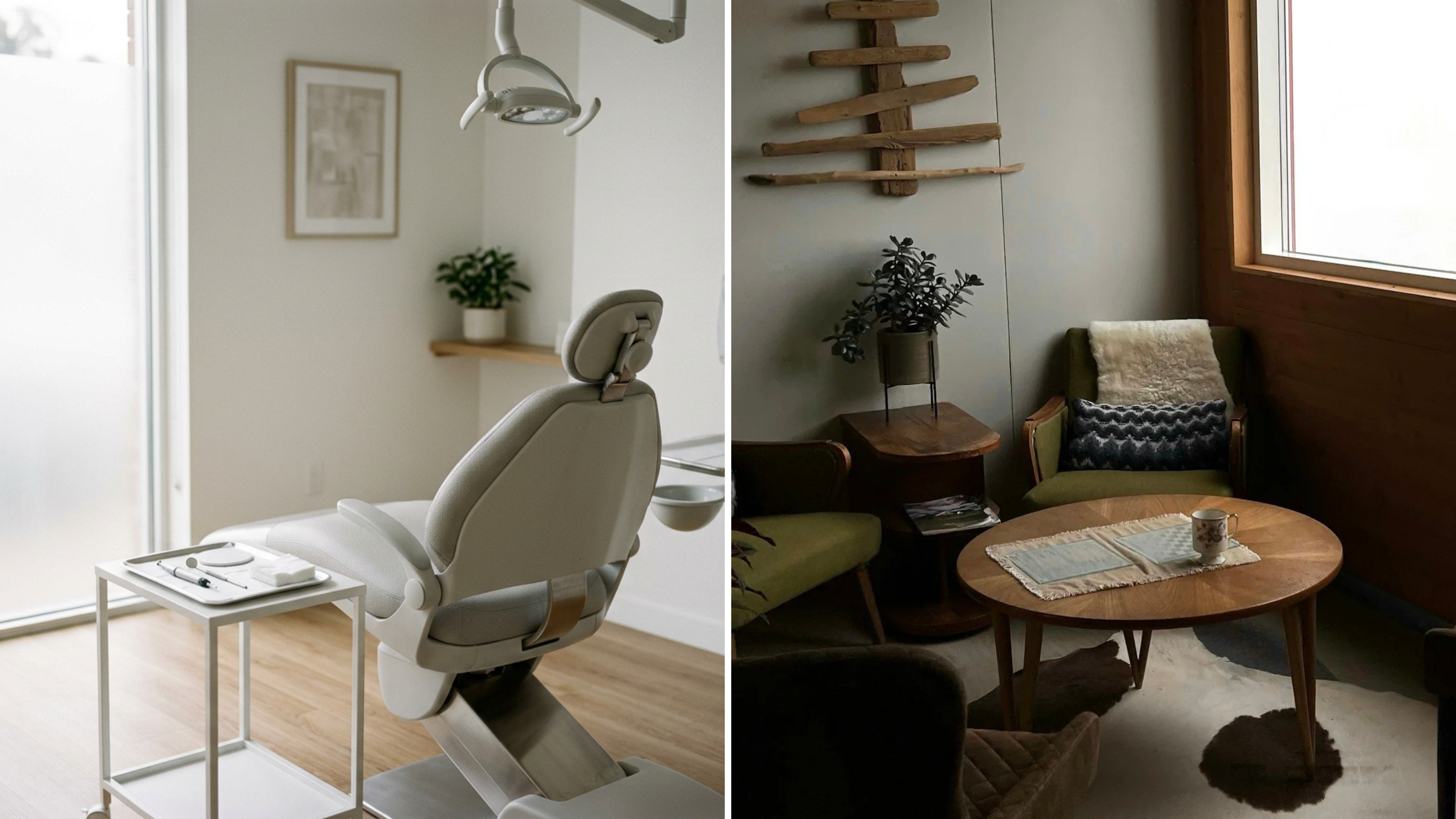
Many of us respond to that bi-annual tooth-cleaning reminder with a distinct feeling of gathering dread. How do those six months seem to slip by so fast? Before you know it, you’re reclining in the vinyl exam chair, staring at the ceiling, and bracing yourself for an hour of discomfort, not to mention a soft lecture about your hygiene habits.
Having found myself in just this position last week, it got me thinking: perhaps many of us see beginning psychotherapy in a similar way. We might think we need it, but dread it all the same, imagining ourselves in the vulnerable position of wincing through an emotional “cleaning” and an exam that will always find us somehow missing the mark.
We may fear that, in therapy, we’ll be forced to “open our mouth,” disclose more than we feel comfortable, and then be judged for whatever is discovered in the process. Imagined this way, therapy would be the last thing someone already in pain might like to do!
While there are plenty of similarities to be found between therapy and general dentistry – insufficient insurance coverage, for one! – I would like to present a few areas in which I feel the two substantively and importantly differ.
You’re not dirty, and you don’t need a “cleaning.”
At the dentist, it’s all about plaque, tartar, and gum disease. Plus, those numbers they call out during the exam that seem to mean something, though I think I’m afraid to ask! Even the term “dental cleaning” implies a certain sullied state that all our teeth tend towards without regular maintenance.
It might seem natural to think therapy is the psychic version of a dental cleaning, with your therapist “popping the hood” and then getting to work targeting areas of grime or decay. But in therapy, the material of your mind isn’t a mess to be cleaned up. Whatever you bring into the consulting room – emotions, fantasies, thoughts, old habits, areas of shame – is meaningful and important, worth understanding, and not to be “thrown out” or scrubbed away. Your mind isn’t a dirty thing that needs cleaning. It’s a meaningful thing that needs exploration; a system that deserves respect and our genuine curiosity.
No Nagging Here…
I think most of us have grown accustomed to those “reminders” about proper flossing and brushing technique we receive after our regular cleanings. We might appreciate the instruction, or it might drive us crazy, either because we feel guilty (“I need to floss more!”) or because we’re tired of being reminded of something we already know we need to improve.
While some therapeutic approaches incorporate out-of-session tasks (for example, homework assignments, thought tracking, and coping skill practice), the type of therapy I offer is all about the here-and-now of the session – no preparation required, and no to-do list to walk away with. It’s the experience, and what emerges in the course of the hour, that creates psychic change.
When things feel stuck, or self-defeating patterns keep happening over and over again in your life, therapy is a space to explore why that might be without enduring a lecture or a nagging about things you already know you should know. The only task here is to show up and be yourself – we go together from there.
Pain Isn’t a Blame Game
When a dentist finds a cavity, or your gums bleed during the cleaning, the implicit message received might go along the lines of, “you didn’t take care of this, so now it hurts.” The pain gets tied up with shame and a sense of being blamed. “If I did better, things wouldn’t be painful here.”
I won’t deny that therapy can be painful at times; such is the work of deep change, as it requires drawing ever closer to what is real, with its accompanying griefs, disappointments, and frustrations. Thomas Ogden, a famous psychoanalyst, instructs that “pain marks the path and determines the sequence of the psychological work that needs to be done.” Pain certainly has a role here.
But in therapy, pain is not a punishment, and it doesn’t direct blame. Pain is a part of the human condition. To feel psychic pain is a necessity to living a full, meaningful, and examined life. When a tender spot gets touched in the consulting room, there is space to slow down, be gentle, and look beneath: what happened there? What can we learn from the sore spot about what you’ve been through?
You Have a Voice!
Perhaps the most literal, and also most symbolic, difference between the dentist and the consulting room is that, at the dentist, hands and instruments fill your mouth. The work of dentistry requires it. When you are at your most vulnerable in the dental chair, you are most unable to speak.
To the contrary, your therapist will do all they can to get out of the way so you can speak freely. Your voice and your words are the core of the process, and therapy, when done well, helps remove the barriers to free expression as much as possible.
The Good News About Therapy
If you’ve been nervous about starting therapy because you’re worried about being judged for how long you’ve waited or how much pain you’re in, you can breathe a little easier. Therapy is a remarkably gentle, collaborative space designed for curiosity, not criticism. Whenever you’re ready to start exploring what’s going on beneath the surface, I invite you to reach out. No bright lights or sharp instruments await you — and I promise not to ask you if you floss!
